
Overview
LiteracyPlanet delivered strong student engagement through gamified literacy activities. Students were active, progressing through missions, and generating meaningful learning data.
I designed the experience across both sides of the platform:
A student dashboard to guide activity, progress, and motivation
A teacher dashboard to interpret that activity and track learning outcomes
The challenge was to connect these two worlds in a way that made sense for both.
The challenge
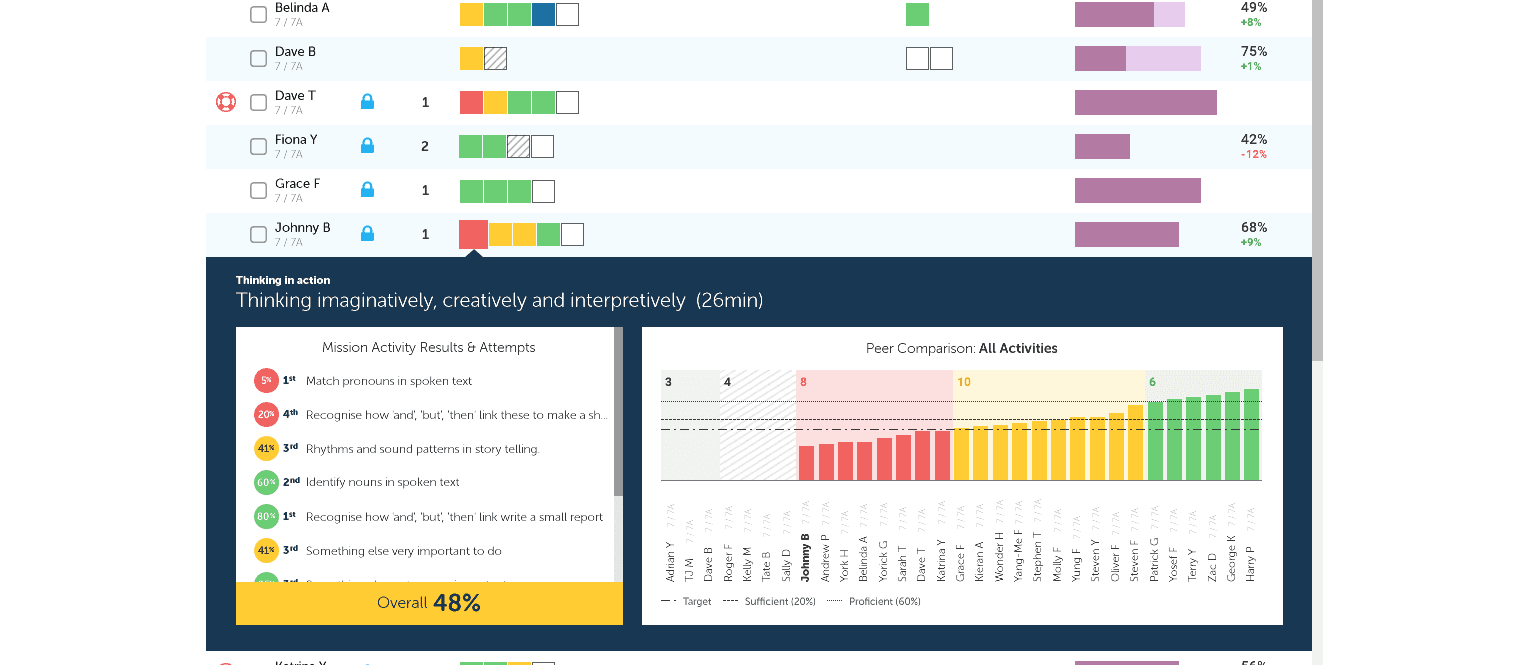
The platform captured rich data through gameplay, but it was not usable in practice.
Teachers needed to quickly understand:
How each student was progressing
How that compared to the rest of the class
Where to step in and support learning
How a child was performing within specific activities
At the same time, students needed:
Clear direction on what to do next
Motivation to continue learning
Feedback that felt rewarding, not academic
The challenge was to connect student activity with meaningful teaching insight.
Research
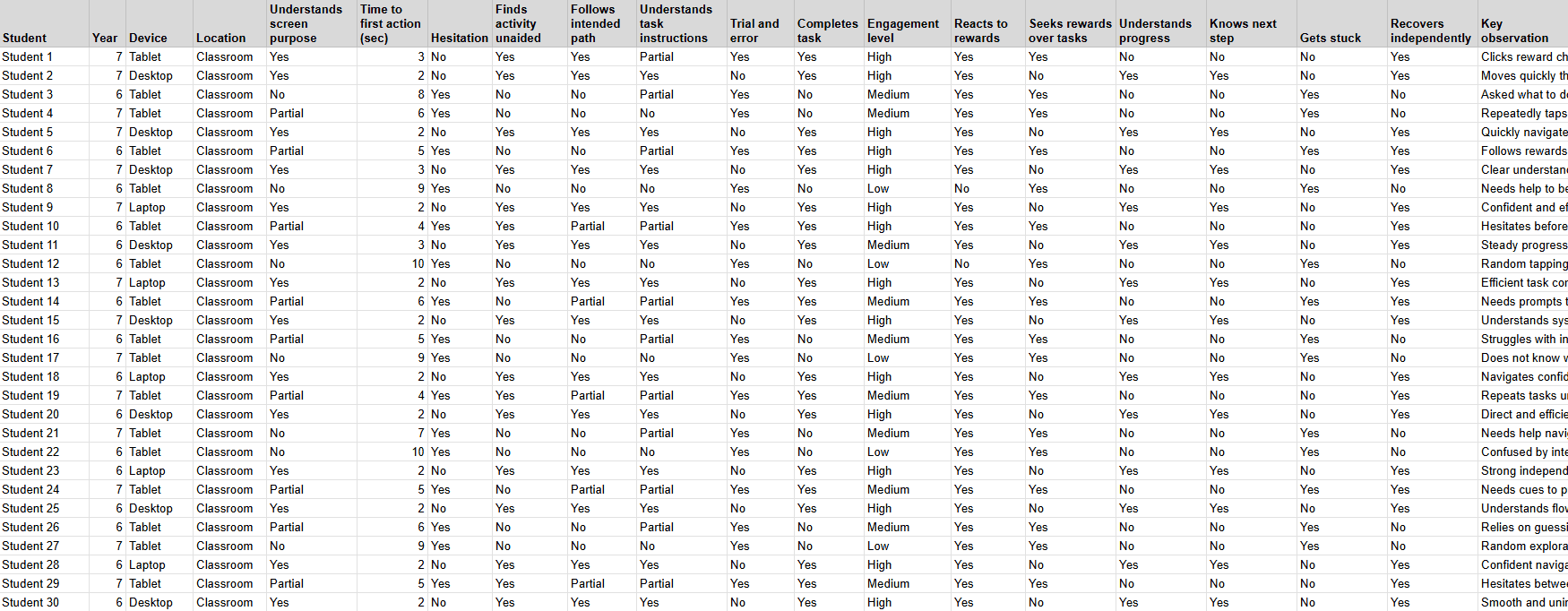
To ground the work, I spent time observing and speaking directly with students using the platform.
This helped me understand:
How children navigate and interpret game-based interfaces
What motivates them to continue or drop off
Where confusion occurs in tasks and progression
How rewards and feedback influence behaviour
A key insight was that students were highly engaged, but not always clear on:
What they had completed
What they should do next
How their progress related to learning
This reinforced the need for:
Clearer structure and guidance in the student experience
Stronger alignment between gameplay and measurable progress


The approach
I designed both experiences together so they worked as one system.
Three principles guided the work:
Clarity for students
Make it obvious what to do next, what has been achieved, and what is coming up.
Visibility for teachers
Surface progress in a way that is quick to understand and easy to act on.
Consistency between both
Ensure that what students experience through gameplay is directly reflected in what teachers see.
The solution
A connected set of dashboards across student and teacher experiences.
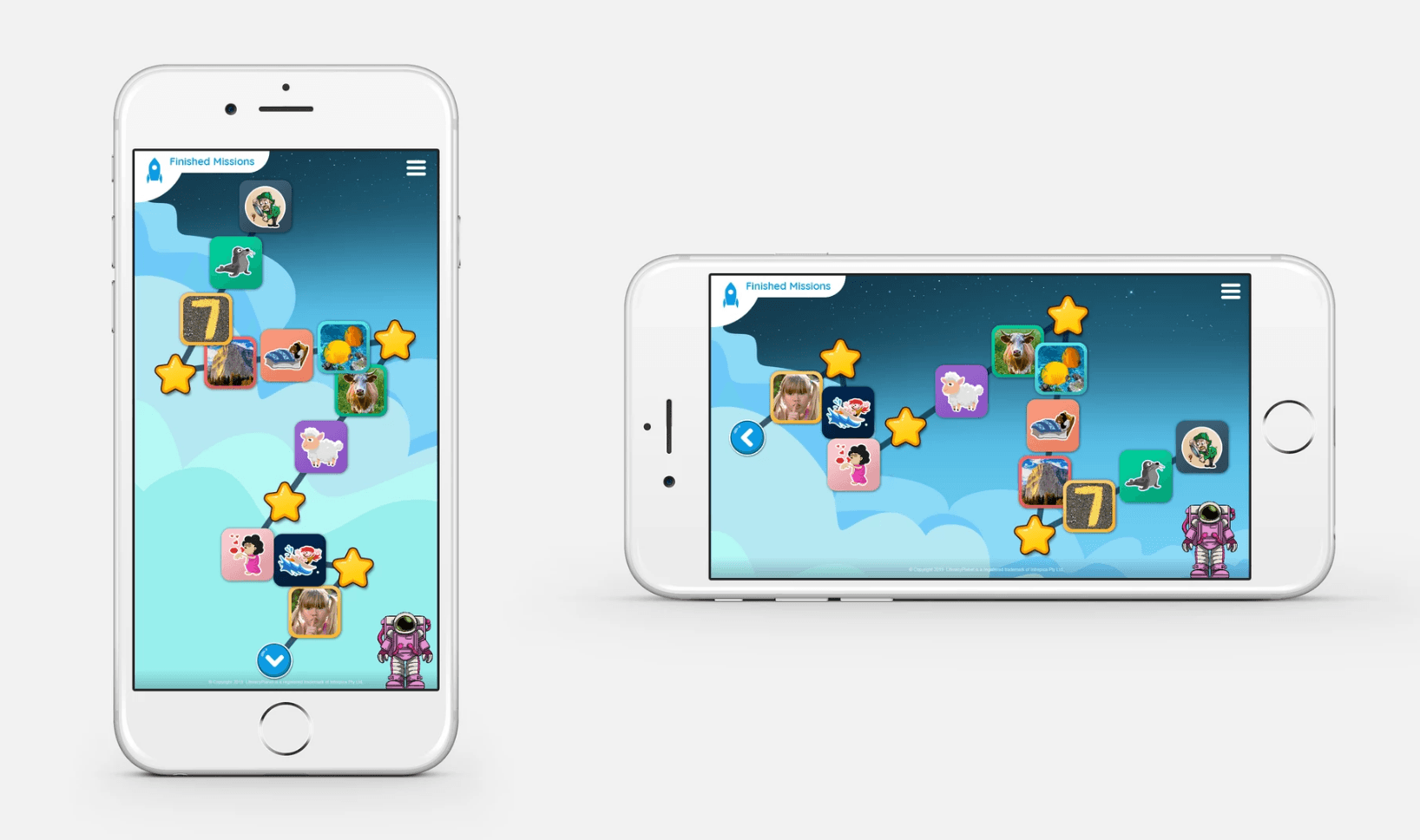
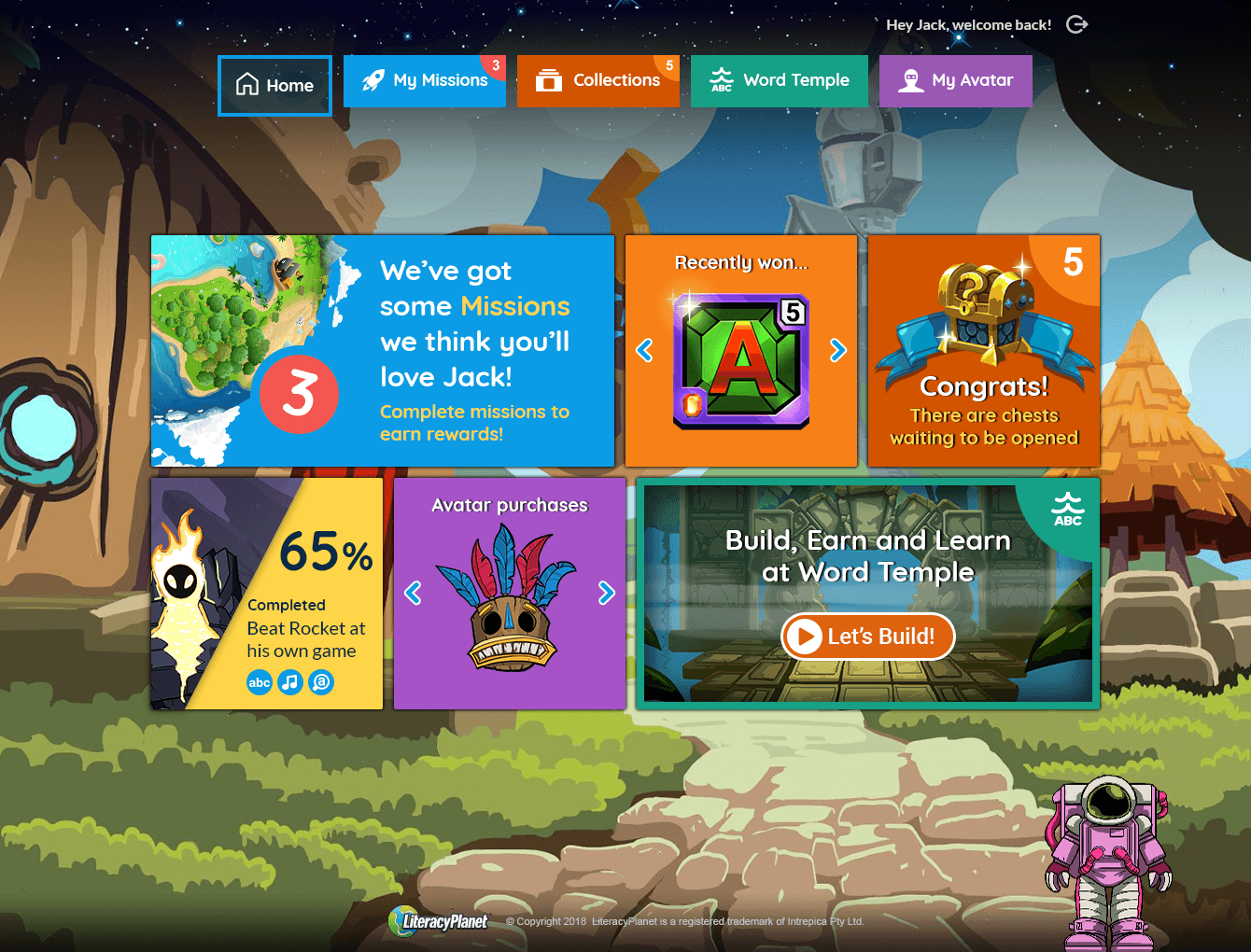
Student dashboard
A visual, engaging home that shows:
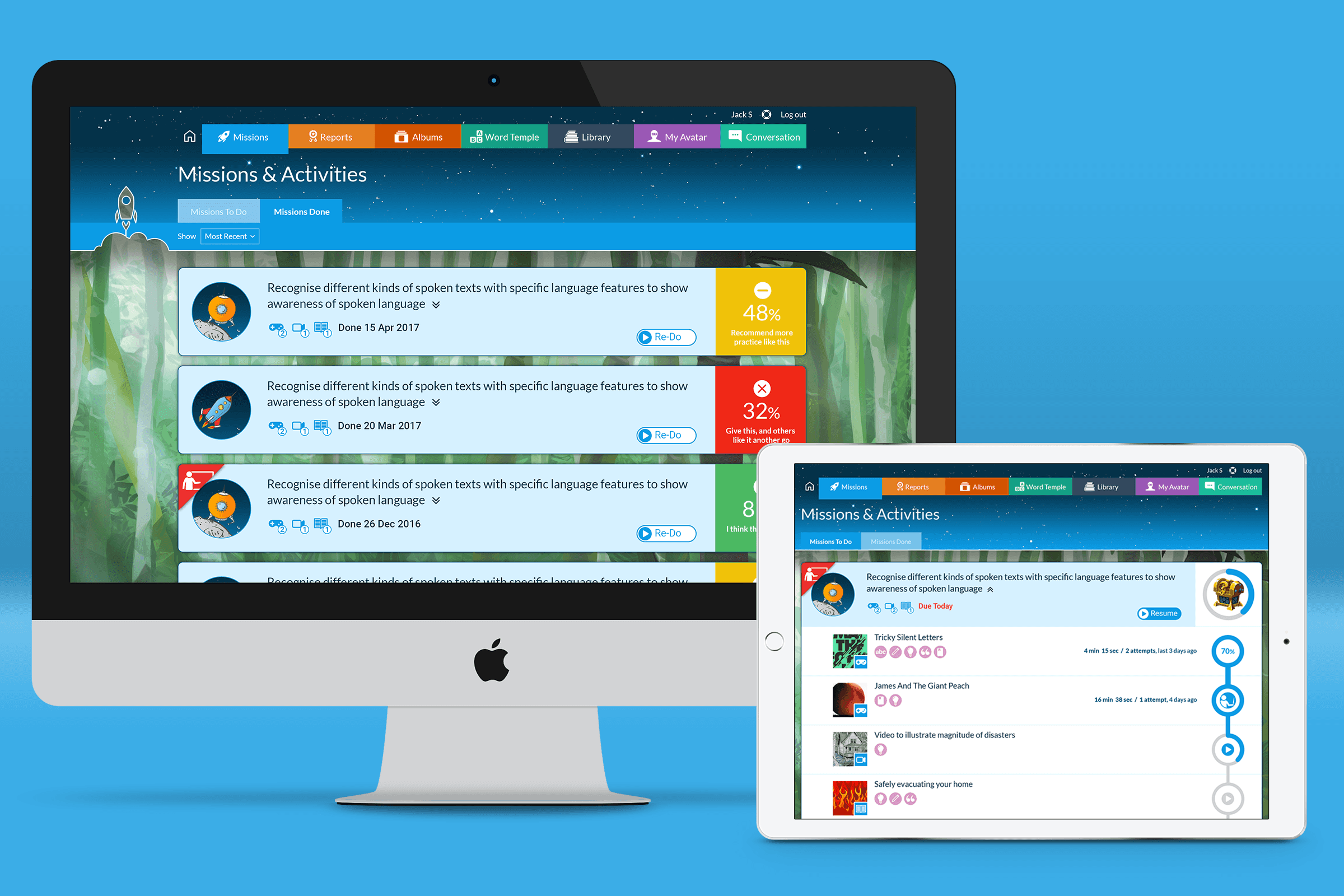
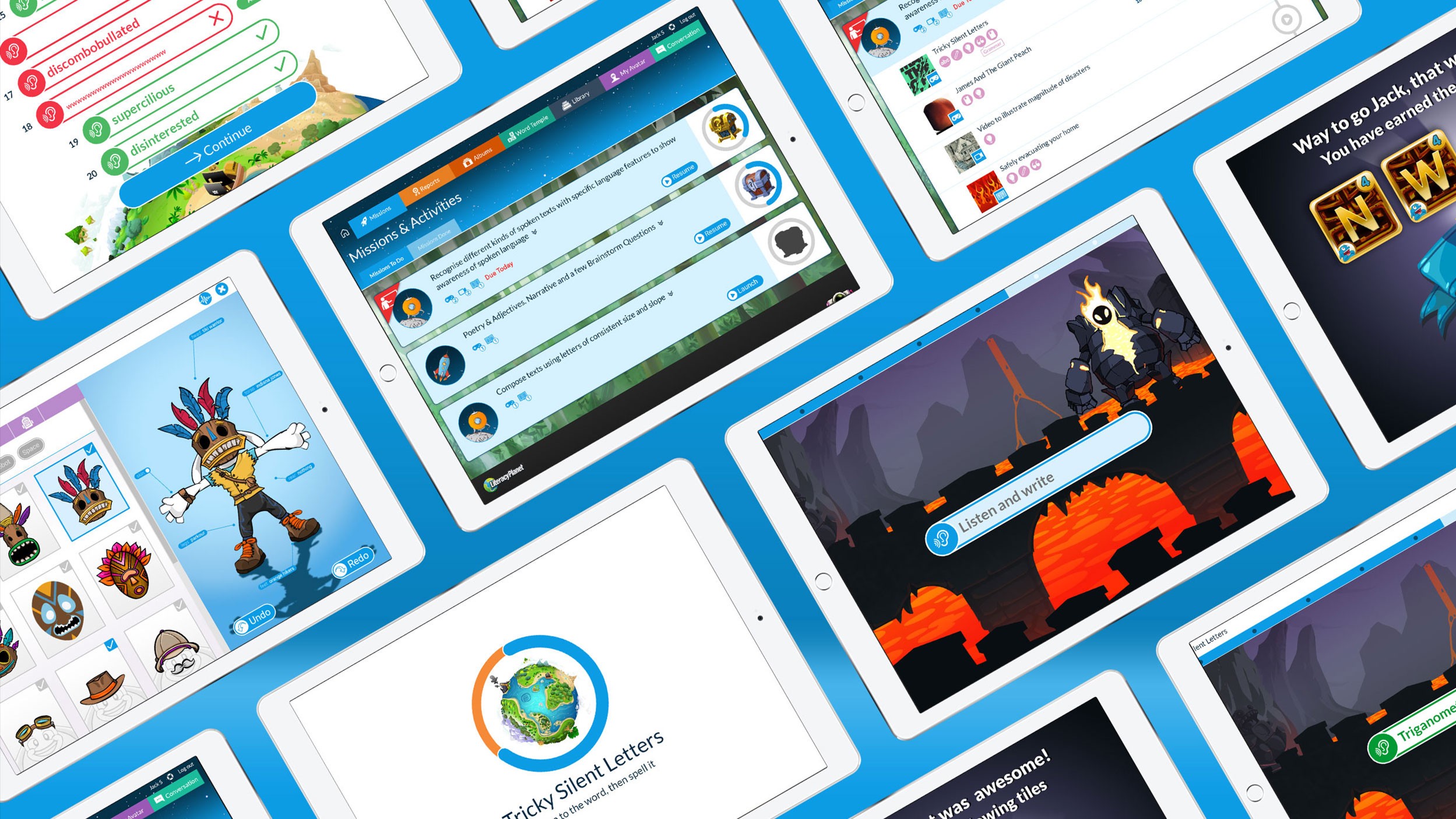
Missions and activities in progress
Rewards, achievements, and progress
Clear next steps to continue learning
This keeps students motivated while reinforcing progress through gameplay.
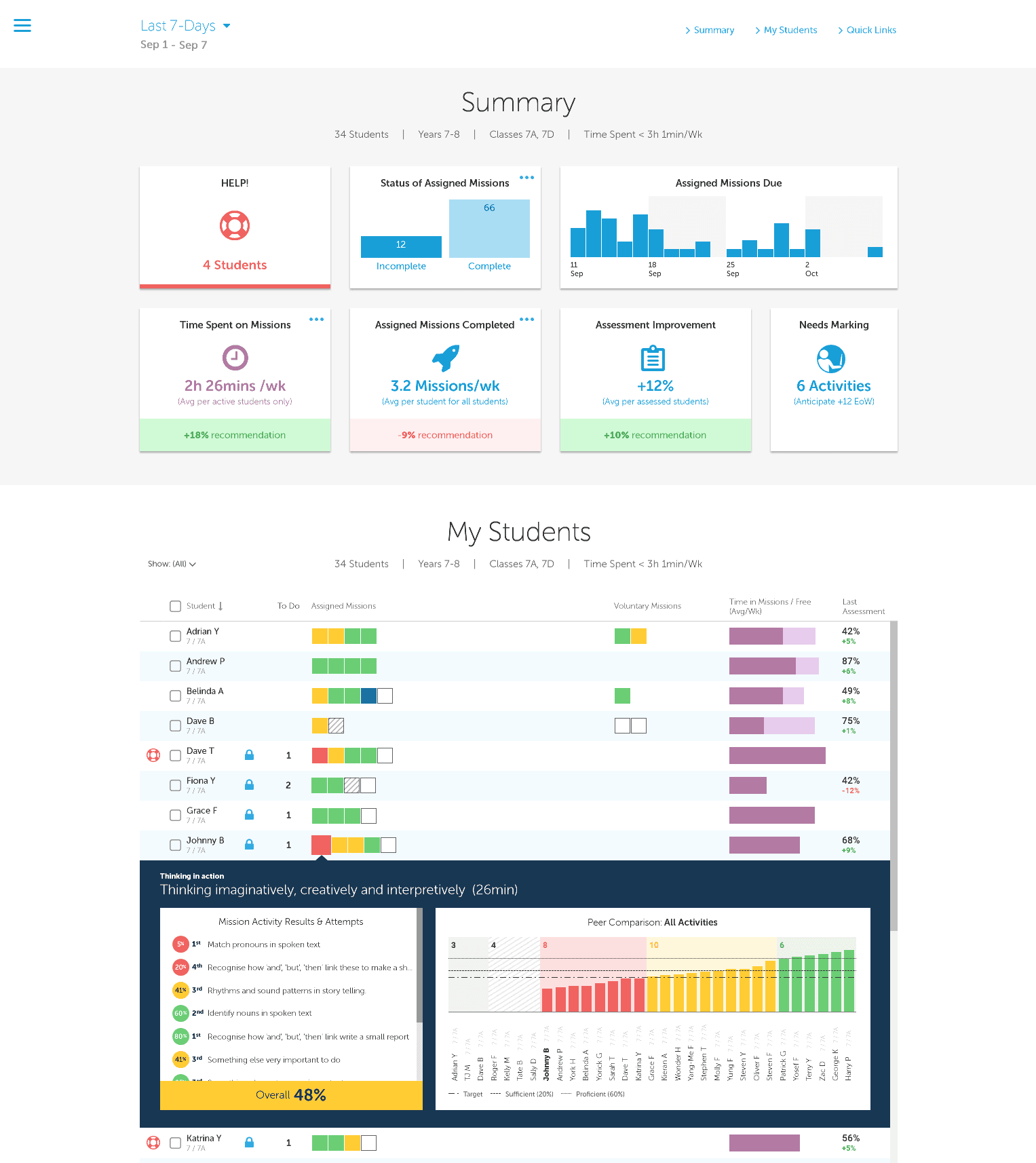
Teacher dashboard
A structured view of class and individual performance, including:
Student progress across assigned activities
Comparison across the class
Time spent, completion, and performance signals
Task-level reporting: A deeper layer that shows how each child performs within specific games and learning tasks, including accuracy, attempts, and areas of difficulty.
Together, these views connect what students do with what teachers need to know.
Outcome
This work aligned the platform across both audiences. From a student-focused experience to a connected system that supports both learning and teaching.
Teachers gained:
Clear visibility of student progress
Confidence in understanding performance
Insight into specific activities and learning gaps
Students gained:
Clear direction and motivation
A stronger sense of progress and achievement
Reflection
The value came from designing both sides together.
Not just engagement for students, and not just reporting for teachers, but a system where each reinforces the other.